 JVP Foods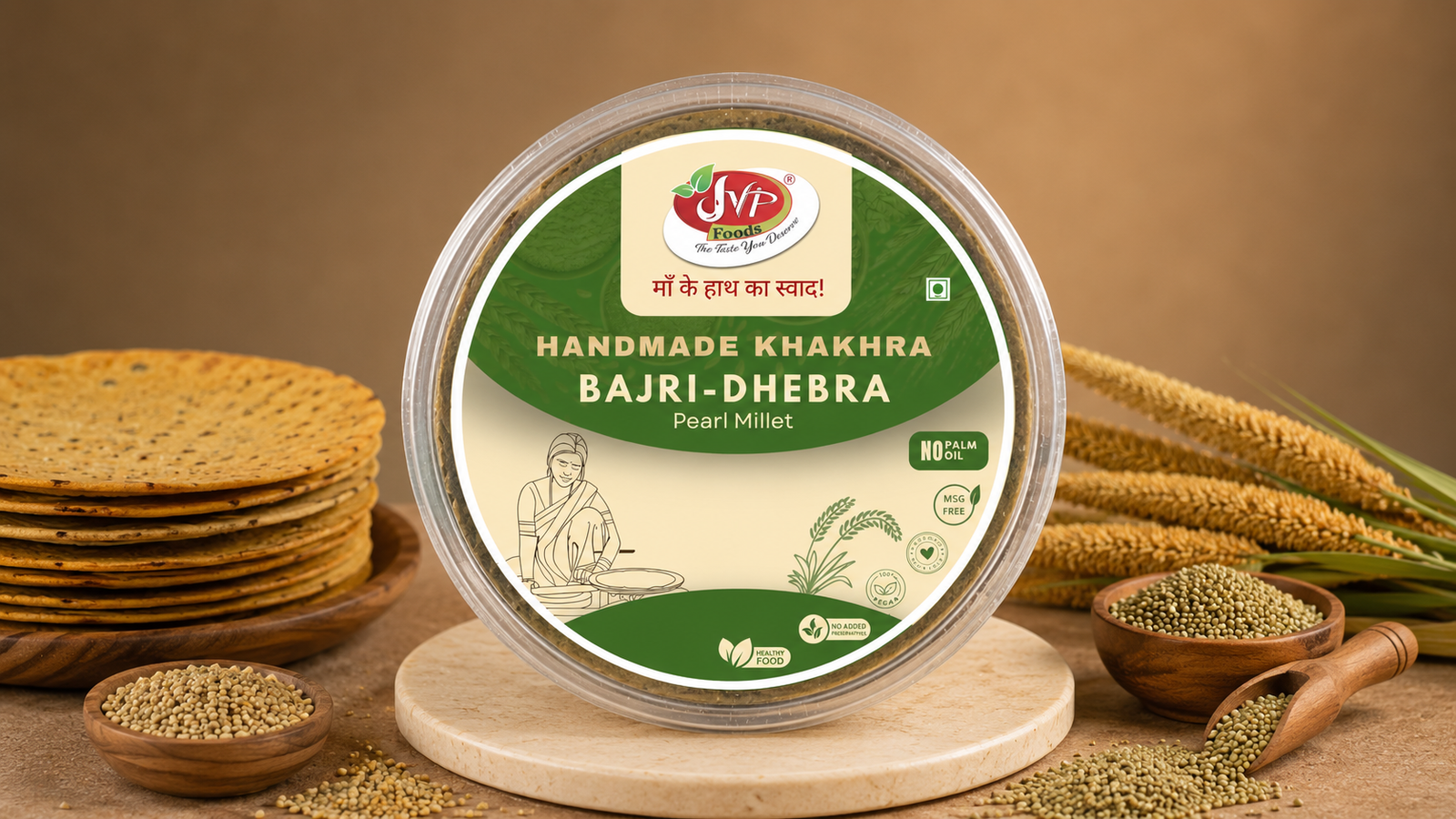
With millet khakhra now a common sight on shelves from Ahmedabad to Pune, one question keeps coming up: ragi or bajra — which one should you actually pick? Both are traditional Indian millets with a long history in Gujarati cooking, but they offer slightly different benefits.
Ragi Khakhra: The Calcium Champion
Ragi (finger millet) is naturally rich in calcium, making Ragi Khakhra a good choice for growing children, older adults, and anyone looking to support bone health. It has a mild, slightly nutty flavour that roasts well into a crisp, brittle khakhra.
Bajra Khakhra: The Iron-Rich Option
Bajra (pearl millet) is traditionally eaten in Gujarat during winter, as it's considered warming and is a good source of iron and magnesium. JVP Foods' Bajri Khakhra is seasoned with sesame seeds and ginger-chili paste, giving it a heartier, more rustic flavour than ragi.
Which One Should You Choose?
- Choose Ragi Khakhra if: you want a calcium boost, prefer a milder taste, or are snacking year-round.
- Choose Bajra Khakhra if: you want more iron, enjoy a rustic flavour, or are snacking during Gujarat and Maharashtra's cooler winter months.
- Can't decide? JVP Foods' Multigrain Khakhra combines both, along with jowar, wheat and flaxseed.
Frequently Asked Questions
Is ragi khakhra better than bajra khakhra?
Neither is strictly better — ragi khakhra is higher in calcium and suits those wanting bone health support, while bajra khakhra is higher in iron and better suited for cooler months.
Can I eat millet khakhra every day?
Yes, millet khakhra made with minimal oil, like JVP Foods' range, is suitable for daily snacking as part of a balanced diet.
Try Both And Decide
Order Ragi and Bajri Khakhra together from JVP Foods, delivered across Gujarat and Maharashtra.